

Introduction
Online Games Gambling has emerged as one of the fastest-growing segments in the digital entertainment industry. With the expansion of internet access, mobile technology, and advanced gaming software, gambling is no longer confined to physical casinos or betting shops. Today, millions of users worldwide participate in online gambling platforms that offer everything from virtual slot machines and poker rooms to sports betting and live dealer experiences.
The rapid rise of Online Games Gambling is largely driven by convenience and accessibility. Players can access their favorite games anytime and anywhere using smartphones, tablets, or computers. This 24/7 availability has dramatically changed how people interact with gambling, making it more integrated into everyday digital life. What was once considered a special occasion activity has now become a routine form of entertainment for many individuals.
Beyond convenience, the industry thrives on innovation. Modern platforms incorporate high-quality graphics, interactive features, secure payment systems, and personalized user experiences. Advanced technologies such as artificial intelligence, live streaming, and blockchain have further enhanced the appeal and trustworthiness of online gambling environments.
However, alongside its growth, Online Games Gambling also presents serious challenges. Issues related to addiction, financial risk, cybersecurity, and regulatory differences across countries continue to raise concerns. As the industry evolves, the need for responsible gambling practices and effective oversight becomes increasingly important.
Understanding Online Games Gambling requires examining both its opportunities and its risks. It is a digital revolution that blends entertainment, technology, and financial speculation into one powerful global industry.
The Evolution of Online Games Gambling Platforms
Online Games Gambling has evolved dramatically over the past two decades. What started as simple web-based betting portals has now become a sophisticated digital ecosystem powered by advanced software, secure payment gateways, and immersive gaming technologies. Understanding this evolution helps explain why the industry continues to expand at such a rapid pace.
Early Stage: Basic Web Casinos
In its early phase, Online Games Gambling platforms were limited in design and functionality. Most websites offered only a few basic games such as digital slots, poker, or blackjack. Graphics were simple, loading times were slow, and payment methods were restricted. Security concerns were also a major issue, as encryption standards were not as advanced as they are today.
Despite these limitations, the concept attracted attention because it allowed players to gamble without visiting a physical casino. The novelty of remote betting played a key role in its initial growth.
Technological Expansion and Innovation
As internet speeds improved and mobile technology developed, Online Games Gambling platforms began transforming rapidly. Developers introduced:
- High-definition graphics and animated slot games
- Live dealer casinos with real-time streaming
- Multiplayer poker tournaments
- Secure SSL encryption for transactions
- Instant deposit and withdrawal systems
The introduction of live dealer games was particularly revolutionary. It blended the comfort of online access with the authenticity of a real casino environment. Players could interact with professional dealers via live video, creating a more engaging and trustworthy experience.
Mobile Revolution
The rise of smartphones significantly accelerated the growth of Online Games Gambling. Mobile apps made gambling accessible 24/7. Instead of sitting at a desktop computer, users could place bets anytime and anywhere.
Mobile optimization also led to:
- Faster game loading
- One-click betting features
- Push notification promotions
- Biometric login security
Today, a large percentage of online gambling traffic comes from mobile devices, showing how important portability has become in this industry.
Integration of Advanced Technologies
Modern Online Games Gambling platforms are no longer just gaming websites. They incorporate cutting-edge technologies such as:
- Artificial Intelligence for personalized recommendations
- Blockchain for transparent and secure transactions
- Cryptocurrency payment options
- Data analytics to improve user experience
- Virtual Reality (VR) for immersive casino environments
Artificial Intelligence is especially important because it helps detect unusual betting patterns and identify potential gambling addiction risks. This not only enhances security but also supports responsible gambling initiatives.
Enhanced User Experience
User experience is now at the center of Online Games Gambling platform design. Websites and apps are built with intuitive interfaces, smooth navigation, and visually appealing layouts. Gamification elements such as leaderboards, reward points, loyalty bonuses, and achievement badges keep users engaged for longer periods.
Customer support has also improved significantly. Many platforms now offer 24/7 live chat assistance, multilingual support, and quick dispute resolution systems to maintain trust and credibility.
Regulatory Development
As Online Games Gambling expanded globally, governments began introducing stricter regulations. Licensing authorities now require platforms to follow compliance standards, implement fair play mechanisms, and provide responsible gambling tools.
Regulated platforms typically offer:
- Age verification systems
- Deposit limits
- Self-exclusion options
- Transparent terms and conditions
These measures aim to balance business growth with consumer protection.
Current Landscape
Today, Online Games Gambling is a multi-billion-dollar industry operating across continents. It includes sports betting, esports wagering, online casinos, fantasy leagues, and skill-based gaming competitions. The digital transformation continues to blur the lines between traditional gaming and gambling, making the ecosystem more interconnected than ever before.
The evolution of Online Games Gambling demonstrates how technology, user demand, and innovation have reshaped a once-traditional industry into a global digital powerhouse.
The Psychological Impact of Online Games Gambling
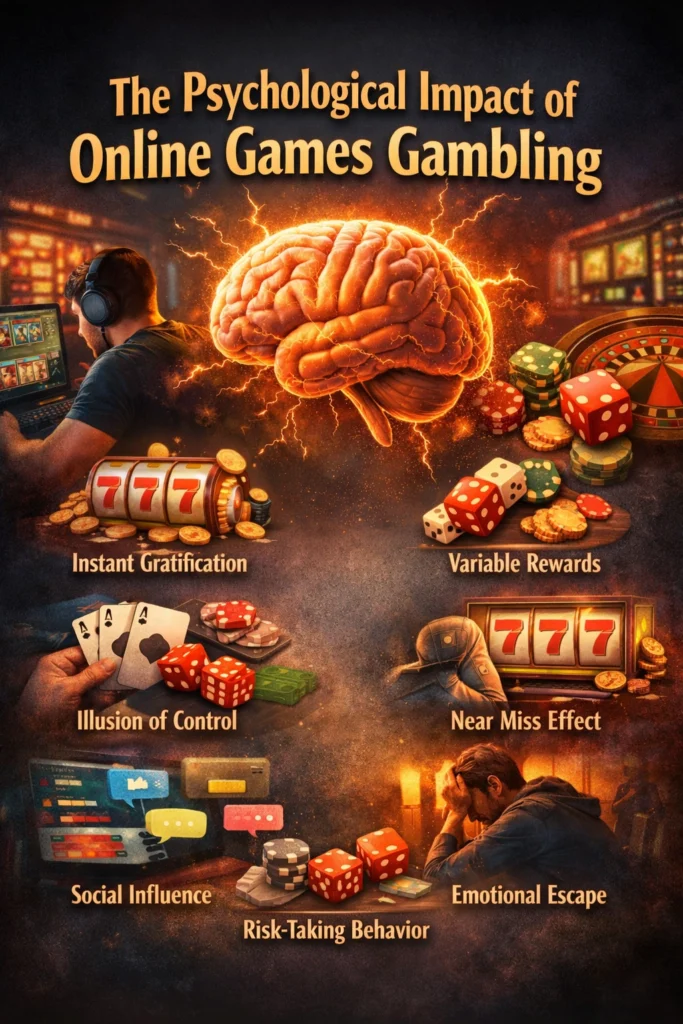
Online Games Gambling is not only a technological and financial phenomenon, but also a deeply psychological experience. The structure, design, and mechanics of online gambling platforms are carefully developed to maximize engagement, excitement, and retention. Understanding the psychological factors behind Online Games Gambling helps explain both its popularity and its risks.
The Power of Instant Gratification
One of the strongest psychological drivers in Online Games Gambling is instant gratification. Unlike many traditional activities that require time and effort before producing rewards, online gambling offers immediate results. A player can place a bet and see the outcome within seconds.
This rapid feedback loop triggers dopamine release in the brain, the same chemical associated with pleasure and reward. The faster the cycle between action and result, the stronger the psychological reinforcement becomes. This is one reason why slot games and quick betting formats are so popular.
Variable Reward System
Online Games Gambling often uses a variable reward schedule. This means players do not know when a win will occur, but they know it is possible at any moment. Psychologically, unpredictable rewards are more powerful than predictable ones.
When a person wins unexpectedly, the excitement feels more intense. Even small wins can encourage continued play because the brain associates gambling with the possibility of reward. This pattern is similar to behavioral conditioning models studied in psychology.
The Illusion of Control
Another psychological factor in Online Games Gambling is the illusion of control. Many games give players choices—such as selecting numbers, choosing cards, or adjusting bet amounts. These actions create a sense of involvement and influence over the outcome.
However, in many gambling formats, results are determined by random number generators or fixed odds. The perception of control can encourage players to believe they can “improve” their chances through strategy, even when outcomes are largely based on probability.
Near Miss Effect
Online Games Gambling platforms often incorporate the “near miss” experience. For example, a slot machine may show two matching symbols with the third symbol slightly off. Although the player loses, the outcome feels close to winning.
Research shows that near misses activate similar brain responses as actual wins. This can motivate players to continue playing in hopes of achieving a full victory. It creates a sense that success is just around the corner.
Social Influence and Competition
Modern Online Games Gambling platforms include social features such as live chats, tournaments, and leaderboards. Seeing other players win can influence behavior. Social proof—the idea that others are succeeding—can increase a person’s willingness to participate.
Competitive formats like poker tournaments or esports betting also appeal to individuals who enjoy skill-based challenges. The combination of competition and financial reward adds another psychological layer to the experience.
Emotional Escape
For some individuals, Online Games Gambling serves as a form of escape from stress, boredom, or emotional discomfort. The immersive nature of digital platforms, combined with flashing visuals and engaging sound effects, can temporarily distract from real-life concerns.
However, using gambling as an emotional coping mechanism can be risky. When losses occur, stress may increase rather than decrease, creating a harmful cycle of chasing losses.
Risk-Taking Behavior
Online Games Gambling attracts individuals with varying levels of risk tolerance. Some players enjoy calculated risks, while others are drawn to high-stakes excitement. The digital environment can make money feel less tangible, especially when transactions are completed through digital wallets or virtual credits.
Because funds are not physically exchanged, players may underestimate how much they are spending. This psychological distancing from real money can lead to overspending.
The Role of Bonuses and Promotions
Bonuses play a major psychological role in Online Games Gambling. Welcome bonuses, free spins, cashback offers, and loyalty rewards create a sense of added value. Even though these promotions often come with wagering requirements, they encourage longer engagement.
The concept of “not wanting to waste a bonus” can motivate players to continue gambling beyond their initial plan.
Responsible Gambling Awareness
As awareness of psychological risks increases, many Online Games Gambling platforms now promote responsible gambling tools. These include:
- Time reminders
- Spending limits
- Reality checks
- Self-exclusion options
These features aim to reduce harmful behavioral patterns and promote balanced participation.
Conclusion of Psychological Perspective
The psychological mechanisms behind Online Games Gambling are powerful and carefully structured. While they enhance entertainment value and engagement, they can also contribute to compulsive behavior if not managed responsibly. Understanding these psychological dynamics empowers individuals to make informed decisions and maintain control over their gambling activities.
In the digital age, awareness is just as important as access.
Legal Regulations and Global Policies in Online Games Gambling
As Online Games Gambling continues to expand across borders, legal frameworks and regulatory policies have become critical components of the industry. Because the internet operates globally, governments face unique challenges in controlling, monitoring, and taxing online gambling platforms. The legal landscape varies significantly from country to country, creating a complex international environment.
Why Regulation Is Important
Regulation in Online Games Gambling serves multiple purposes:
- Protecting players from fraud and unfair practices
- Preventing underage gambling
- Promoting responsible gambling behavior
- Ensuring fair play through certified systems
- Generating tax revenue for governments
Without proper oversight, the industry could become vulnerable to scams, money laundering, and exploitation of vulnerable users.
Countries with Legal and Regulated Markets
Several countries have embraced Online Games Gambling by introducing structured regulatory frameworks. In regulated markets, gambling operators must obtain licenses from recognized authorities. These authorities enforce strict rules regarding fairness, transparency, and consumer protection.
Licensed platforms are usually required to:
- Use certified Random Number Generators (RNGs)
- Display clear terms and conditions
- Provide responsible gambling tools
- Verify player identity and age
- Follow anti-money laundering (AML) guidelines
Regulation in these regions often strengthens consumer trust and promotes safer participation.
Countries with Partial Restrictions
Some nations allow certain forms of Online Games Gambling while restricting others. For example, sports betting may be legal, but online casino games may be prohibited. In such environments, players may access offshore platforms that operate outside domestic jurisdiction.
This creates enforcement challenges, as governments may not have direct control over foreign-based websites. Payment restrictions and internet blocking are sometimes used as preventive measures.
Countries with Complete Bans
A number of countries have imposed full bans on Online Games Gambling due to cultural, religious, or social concerns. In these regions, participating in online gambling may result in legal penalties. Despite bans, some users still access international platforms using virtual private networks (VPNs), complicating enforcement efforts.
Licensing Authorities and Oversight
Internationally recognized licensing authorities play a major role in regulating Online Games Gambling. These regulatory bodies issue licenses, conduct audits, and monitor compliance.
Licensed platforms typically display their certification information openly to build credibility. Players are often encouraged to verify a platform’s license before depositing funds.
Taxation and Economic Impact
Governments that regulate Online Games Gambling often impose taxes on operator revenue. This taxation generates substantial income that can be allocated to public services such as healthcare, education, and infrastructure.
However, tax rates must be balanced carefully. Extremely high tax rates may push operators to relocate to more favorable jurisdictions, reducing domestic control over the market.
Consumer Protection Measures
Modern regulations emphasize consumer protection. Common measures include:
- Mandatory identity verification (KYC procedures)
- Deposit and loss limits
- Transparent payout percentages
- Complaint resolution systems
- Dedicated support for gambling addiction
These policies aim to reduce harm while allowing adults to participate legally.
Challenges in Cross-Border Enforcement
Because Online Games Gambling platforms operate digitally, enforcing local laws can be difficult. A website registered in one country may serve players from dozens of others. Jurisdictional conflicts arise when legal standards differ.
International cooperation and information sharing between regulatory bodies are becoming increasingly important to address these cross-border challenges.
The Future of Gambling Regulation
As Online Games Gambling continues to grow, more countries are reviewing their legal frameworks. Some governments that previously banned online gambling are reconsidering legalization to capture tax revenue and improve oversight.
Emerging technologies such as blockchain and cryptocurrency also present new regulatory challenges. Lawmakers must adapt policies to address digital wallets, decentralized platforms, and anonymous transactions.
Conclusion on Legal Frameworks
The legal environment of Online Games Gambling remains dynamic and evolving. While some regions have established comprehensive regulatory systems, others continue to debate the social and economic implications. Effective regulation plays a crucial role in ensuring fairness, protecting consumers, and maintaining industry stability in the digital age.
Balancing economic opportunity with social responsibility will remain one of the most important challenges for policymakers worldwide.
Financial Risks and Economic Impact of Online Games Gambling
Online Games Gambling is often promoted as a source of entertainment and potential financial gain. While it does create economic opportunities at both individual and national levels, it also carries significant financial risks. Understanding both sides is essential for a balanced perspective.
Personal Financial Risks
At an individual level, Online Games Gambling can quickly shift from entertainment to financial strain. Because platforms allow instant deposits and continuous betting, losses can accumulate faster than expected.
Some of the most common financial risks include:
- Overspending beyond personal budgets
- Chasing losses in an attempt to recover money
- Accumulating debt through credit cards or loans
- Neglecting essential expenses like rent or bills
The digital nature of Online Games Gambling makes money feel less tangible. When players use e-wallets, prepaid balances, or cryptocurrency, they may lose track of real-world spending. Small repeated bets can gradually turn into substantial losses.
The Concept of “Chasing Losses”
One of the biggest financial dangers in Online Games Gambling is the tendency to chase losses. After losing money, a player may increase bet amounts hoping to win it back quickly. This behavior often leads to even larger losses.
This cycle can become financially destructive, especially for individuals who view gambling as a solution to financial problems rather than a form of entertainment.
Income Inequality and Vulnerable Groups
Studies in various regions suggest that lower-income individuals may spend a higher percentage of their income on gambling compared to wealthier groups. The promise of a “big win” can appear attractive to those facing financial hardship.
Online Games Gambling platforms, with their easy accessibility, may increase exposure for financially vulnerable populations. Without proper safeguards, this can widen economic inequality rather than reduce it.
Economic Contributions and Industry Growth
On the other hand, Online Games Gambling contributes significantly to the global economy. The industry generates billions in annual revenue and supports multiple sectors, including:
- Software development
- Cybersecurity
- Digital marketing
- Customer support services
- Financial technology (FinTech)
Governments in regulated markets benefit from tax revenue collected from licensed operators. These funds may be used to support public programs, infrastructure, and social services.
Job Creation and Innovation
The rapid expansion of Online Games Gambling has created employment opportunities worldwide. Developers design advanced gaming systems, designers create immersive graphics, and compliance officers ensure legal adherence.
The demand for secure payment systems and fraud prevention has also driven innovation in cybersecurity and blockchain technologies.
The Balance Between Revenue and Social Cost
While Online Games Gambling generates economic benefits, it can also impose social costs. Financial distress caused by excessive gambling may lead to:
- Increased demand for mental health services
- Family financial instability
- Bankruptcy cases
- Reduced workplace productivity
Governments must weigh the tax revenue generated by online gambling against the potential social support costs associated with gambling-related harm.
Responsible Financial Practices
To reduce financial risks, many platforms promote responsible gambling features such as:
- Deposit limits
- Loss limits
- Spending trackers
- Cooling-off periods
- Self-exclusion options
Players are encouraged to set budgets before participating and to treat Online Games Gambling strictly as entertainment rather than as an income source.
Financial Literacy and Awareness
Improving financial literacy plays a crucial role in minimizing harm. When individuals understand probability, risk management, and budgeting, they are less likely to make impulsive gambling decisions.
Educational initiatives and awareness campaigns can help players recognize warning signs of problematic gambling behavior before it becomes financially damaging.
Long-Term Economic Outlook
The future of Online Games Gambling will likely involve stronger financial monitoring tools powered by artificial intelligence. Platforms may increasingly use predictive systems to detect risky spending patterns and intervene early.
At the same time, economic competition among operators may drive further innovation, improved user experiences, and expanded market reach.
Conclusion on Financial Perspective
Online Games Gambling represents a double-edged sword in economic terms. It provides employment, technological growth, and tax revenue, but it also carries the risk of personal financial hardship and social consequences. Sustainable growth in this industry depends on responsible participation, balanced regulation, and ongoing financial education.
In the digital age, financial awareness is just as important as digital access.
The Future of Online Games Gambling in the Digital Era
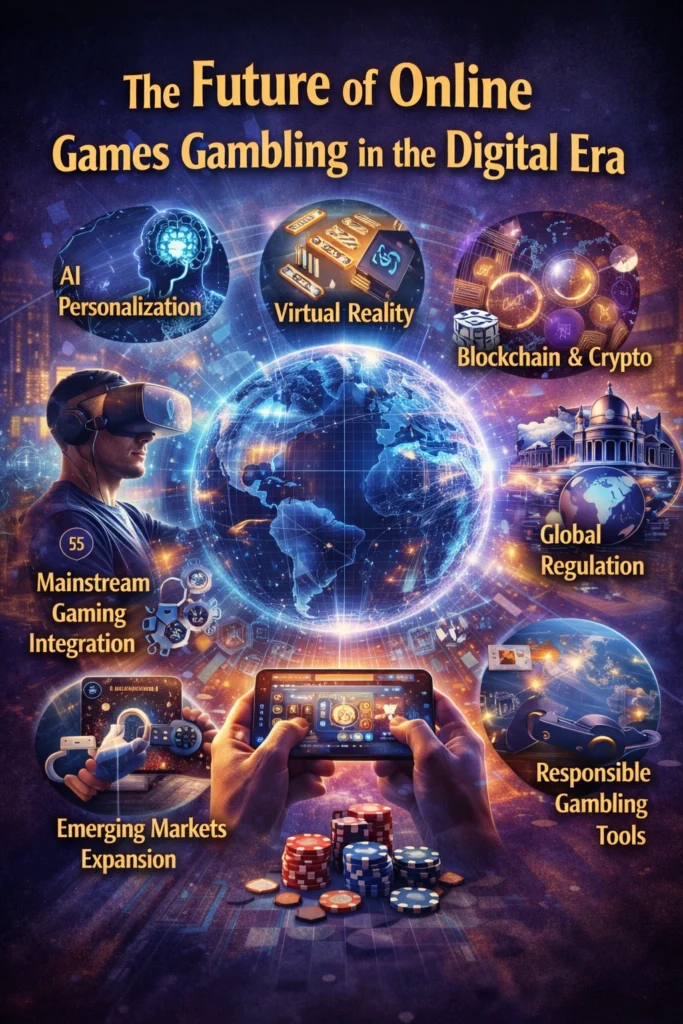
Online Games Gambling is continuously evolving, driven by technological innovation, shifting consumer behavior, and regulatory transformation. As digital ecosystems expand, the future of this industry promises to be even more immersive, data-driven, and globally interconnected. However, with innovation comes responsibility, making the future both exciting and challenging.
Artificial Intelligence and Smart Personalization
Artificial Intelligence (AI) is expected to play a major role in shaping the next phase of Online Games Gambling. Platforms are already using AI to analyze player behavior, recommend games, and customize promotional offers.
In the future, AI systems may:
- Detect early signs of gambling addiction
- Automatically apply responsible gambling limits
- Improve fraud detection and security monitoring
- Offer real-time risk assessments
AI-driven personalization will make gaming experiences more tailored, but it will also raise questions about ethical data usage and privacy.
Virtual Reality and Immersive Gaming
Virtual Reality (VR) and Augmented Reality (AR) technologies are gradually entering the Online Games Gambling space. Instead of simply tapping on a screen, players may soon walk through fully immersive virtual casinos using VR headsets.
These environments could simulate:
- Realistic casino floors
- Interactive live dealer tables
- Social gambling lounges
- Multiplayer competitive arenas
Such immersive experiences may blur the line between physical and digital gambling, creating a new dimension of engagement.
Blockchain and Cryptocurrency Integration
Blockchain technology is already influencing Online Games Gambling by providing transparency and decentralization. In the coming years, its role may expand further.
Potential developments include:
- Provably fair gaming systems
- Faster and more secure global transactions
- Reduced transaction fees
- Smart contract-based betting
Cryptocurrency payments may also become more common, offering greater anonymity and cross-border flexibility. However, regulatory frameworks will need to adapt to manage these decentralized financial systems.
Increased Global Regulation
As the industry grows, more governments are likely to introduce structured legal frameworks for Online Games Gambling. Countries that previously imposed bans may reconsider legalization to benefit from taxation and oversight.
Future regulations may focus on:
- Stricter advertising standards
- Enhanced age verification technology
- Mandatory affordability checks
- International cooperation between regulatory authorities
The goal will be to balance economic growth with social responsibility.
Integration with Mainstream Gaming
The boundary between online gaming and Online Games Gambling may continue to blur. Elements such as loot boxes, digital collectibles, and competitive esports betting already share similarities with gambling systems.
Future digital platforms might combine:
- Competitive skill-based gaming
- Fantasy sports
- Micro-betting features
- Social reward systems
This integration will likely spark ongoing debates about classification, legality, and youth protection.
Stronger Responsible Gambling Tools
As awareness increases, responsible gambling technology is expected to become more advanced. Platforms may introduce predictive monitoring systems that analyze behavior patterns and intervene before financial harm escalates.
Future tools could include:
- Real-time behavioral alerts
- Mandatory cooling-off periods
- Financial health assessments
- Integrated mental health resources
These innovations aim to create a safer gambling environment while maintaining entertainment value.
Expansion into Emerging Markets
Developing regions with increasing internet penetration and smartphone adoption represent significant growth opportunities for Online Games Gambling. As digital infrastructure improves, new markets will open.
However, cultural values, economic conditions, and regulatory readiness will shape how quickly these markets adopt online gambling platforms.
The Ethical Debate
The future of Online Games Gambling will also involve ongoing ethical discussions. Questions surrounding marketing practices, user data privacy, psychological design, and social responsibility will remain central.
Industry leaders, regulators, and communities will need to collaborate to ensure that innovation does not come at the expense of consumer well-being.
Long-Term Industry Outlook
The long-term trajectory of Online Games Gambling suggests sustained growth fueled by digital transformation. With advancements in AI, immersive technologies, secure payment systems, and global connectivity, the industry is likely to become even more sophisticated.
However, sustainable success will depend on maintaining trust, transparency, and responsible practices.
Final Perspective on the Future
Online Games Gambling stands at the intersection of entertainment, finance, and technology. Its future will not only be shaped by innovation but also by how effectively society manages its risks. The digital era offers immense possibilities, but it also demands accountability.
As technology advances, the most successful platforms will be those that combine cutting-edge experiences with strong ethical standards and user protection measures.
Responsible Gambling and Player Protection in Online Games Gambling
As Online Games Gambling continues to grow globally, responsible gambling and player protection have become central pillars of industry sustainability. While digital platforms offer entertainment and convenience, they also carry potential risks. Ensuring player safety is not only a regulatory requirement in many regions but also a moral responsibility for operators and users alike.
The Importance of Responsible Gambling
Responsible gambling refers to practices and policies designed to prevent harmful behavior related to Online Games Gambling. It promotes the idea that gambling should remain a form of entertainment, not a way to generate income or solve financial problems.
Without proper controls, the 24/7 accessibility of online platforms can increase the likelihood of excessive participation. Responsible gambling frameworks aim to create a balanced environment where players maintain control over their activity.
Key Responsible Gambling Tools
Modern Online Games Gambling platforms provide various tools to help users manage their behavior. These features empower players to set boundaries and make informed decisions.
Common tools include:
- Deposit Limits: Players can set daily, weekly, or monthly caps on how much money they can deposit.
- Loss Limits: Restrictions on the maximum amount that can be lost within a specific timeframe.
- Time Limits: Automatic session reminders or enforced breaks after extended play.
- Self-Exclusion Programs: Players can voluntarily block access to their accounts for a fixed or indefinite period.
- Reality Checks: On-screen notifications showing time spent and money wagered.
These features encourage transparency and help reduce impulsive behavior.
Age Verification and Identity Checks
Preventing underage gambling is a critical component of Online Games Gambling regulation. Licensed platforms typically use strict identity verification procedures, often referred to as Know Your Customer (KYC) processes.
These procedures may include:
- Submission of government-issued identification
- Proof of address verification
- Secure identity authentication systems
Effective age verification ensures that gambling remains restricted to legal adults.
Early Detection Through Data Monitoring
Advanced technology allows operators to monitor player behavior patterns. Algorithms can detect unusual activity such as rapid deposit increases, extended playing sessions, or sudden high-risk betting behavior.
When such patterns are identified, platforms may:
- Send responsible gambling reminders
- Suggest setting limits
- Temporarily restrict certain features
- Offer support resources
This proactive approach aims to intervene before gambling becomes harmful.
Support and Counseling Resources
Many Online Games Gambling platforms collaborate with independent support organizations that specialize in gambling addiction assistance. These resources provide confidential advice, counseling, and rehabilitation programs.
Support services may include:
- 24/7 helplines
- Online chat counseling
- Self-assessment tools
- Educational materials about gambling risks
Providing access to external support strengthens player protection efforts.
The Role of Education and Awareness
Education is one of the most powerful tools in promoting responsible participation in Online Games Gambling. When players understand probability, risk, and the nature of random outcomes, they are less likely to develop unrealistic expectations.
Awareness campaigns often emphasize that:
- Gambling outcomes are based on chance
- Long-term profit is statistically unlikely
- Losses are part of the activity
- Gambling should never replace income sources
Clear communication helps build informed and responsible users.
Advertising and Ethical Marketing
Responsible gambling also extends to marketing practices. Ethical promotion avoids targeting minors, vulnerable individuals, or financially distressed groups.
Many regulated markets now impose strict rules on:
- Bonus transparency
- Influencer marketing
- Social media promotions
- Celebrity endorsements
Transparent advertising supports trust and reduces misleading expectations.
Shared Responsibility Model
Ensuring safety in Online Games Gambling is not solely the responsibility of operators. It requires cooperation between:
- Platform providers
- Regulatory authorities
- Financial institutions
- Players themselves
- Community support organizations
A shared responsibility model creates a stronger safety network and promotes long-term industry stability.
Building a Safer Digital Environment
The future of Online Games Gambling depends heavily on player protection. Platforms that prioritize safety and ethical practices are more likely to build lasting trust with their users.
Strong responsible gambling policies not only protect individuals but also enhance the reputation and sustainability of the industry as a whole.
Conclusion on Responsibility
Online Games Gambling can remain a form of entertainment when approached with awareness, limits, and responsible behavior. As technology advances and access expands, maintaining strong protective measures will be more important than ever.
In the digital age, responsible gambling is not optional—it is essential for a healthy and balanced gaming ecosystem.
Conclusion: Balancing Opportunity and Risk in Online Games Gambling
Online Games Gambling has evolved into a powerful digital industry that blends entertainment, technology, and financial engagement. What once required a visit to a physical casino can now be accessed instantly through mobile devices and computers. Platforms like kheloyaar reflect how the industry continues to expand in the digital era, offering users convenient access to modern gaming experiences.
The appeal of Online Games Gambling lies in its accessibility, game variety, immersive features, and the excitement of potential rewards. Players can explore everything from live dealer games to competitive betting platforms within seconds. International platforms such as betbhai9casino also demonstrate how global the industry has become, connecting users across borders through advanced digital systems.
However, alongside these opportunities come significant risks. Financial loss, psychological dependency, and compulsive gambling behaviors remain serious concerns. The same innovations that enhance user engagement—such as instant betting, real-time rewards, and personalized promotions—can also intensify risky behavior if not approached responsibly.
For the industry to grow sustainably, a balance must be maintained between innovation and player protection. Strong regulatory oversight, transparent operations, responsible gambling tools, and ethical marketing practices are essential. Players must also take personal responsibility by setting limits and treating Online Games Gambling strictly as entertainment rather than a source of income.
The future of Online Games Gambling will likely bring even more technological advancements, from artificial intelligence monitoring systems to immersive virtual environments. Yet long-term success will depend not only on innovation but also on trust, accountability, and awareness.
In the end, Online Games Gambling represents both opportunity and responsibility. When supported by safe platforms, informed decisions, and proper safeguards, it can remain an engaging digital activity. The key lies in maintaining control, practicing moderation, and ensuring that entertainment never turns into harm.
Frequently Asked Questions (FAQ) About Online Games Gambling
1. What is Online Games Gambling?
Online Games Gambling refers to digital platforms where users can place bets or wager money on games such as slots, poker, blackjack, roulette, sports betting, and other casino-style activities through the internet.
2. Is Online Games Gambling legal?
The legality of Online Games Gambling depends on the country or region you are in. Some countries fully regulate and license online gambling, while others restrict or completely ban it. Players should always check their local laws before participating.
3. How do Online Games Gambling platforms work?
Most platforms operate using Random Number Generators (RNGs) or live dealer systems to ensure fairness. Players create accounts, deposit funds, choose games, and place bets. Winnings can usually be withdrawn through approved payment methods.
4. Is Online Games Gambling safe?
Online Games Gambling can be safe if you use licensed and regulated platforms that provide encryption technology, secure payment systems, and responsible gambling tools. However, unregulated websites may pose risks such as fraud or data theft.
5. Can you really win money from Online Games Gambling?
Yes, players can win real money. However, all gambling activities involve risk, and outcomes are largely based on probability. Long-term profit is not guaranteed, and losses are always possible.
6. What are the risks of Online Games Gambling?
The main risks include financial loss, addiction, emotional stress, and debt accumulation. Excessive gambling can also impact relationships and mental well-being if not managed responsibly.
7. How can I gamble responsibly online?
To practice responsible gambling:
- Set a strict budget before playing
- Use deposit and loss limits
- Avoid chasing losses
- Take regular breaks
- Never gamble with money meant for essential expenses
8. Are mobile gambling apps safe?
Mobile gambling apps can be safe if downloaded from official sources and operated by licensed providers. Always verify the platform’s credentials before depositing money.
9. What payment methods are used in Online Games Gambling?
Common payment methods include credit/debit cards, bank transfers, e-wallets, prepaid cards, and sometimes cryptocurrencies. Availability depends on the platform and region.
10. How can someone stop Online Games Gambling if it becomes a problem?
Most platforms offer self-exclusion options and account suspension features. Additionally, professional counseling services, support groups, and helplines are available to assist individuals struggling with gambling addiction.