
Introduction
Games and gambling have existed side by side throughout human history, often appearing similar but carrying very different meanings and consequences. Both involve uncertainty, excitement, and the possibility of winning, yet the motivation behind them separates entertainment from risk. A game is usually played for enjoyment, competition, and improvement of skill, while gambling revolves around wagering something valuable on an unpredictable outcome. This small distinction creates a major impact on behavior, emotions, and decision-making.
In the modern world, technology has brought both activities closer than ever. Mobile apps, online platforms, and digital rewards blur the boundary between play and betting, making it harder for people to recognize when fun turns into financial risk. The attraction remains powerful because uncertainty triggers anticipation — the feeling that something exciting might happen at any moment. Understanding how games differ from gambling is important not only for awareness but also for maintaining control over time, money, and mental well-being.
Psychology Behind Games and Gambling
Games and gambling attract people for different reasons, but both activate the same mental triggers. The excitement in games and gambling comes from uncertainty. When a person plays games and gambling activities, the brain releases anticipation chemicals that create pleasure even before the result appears. This is why games and gambling feel engaging whether someone is playing a video game, card game, or placing a bet.
In games and gambling environments, the mind constantly predicts outcomes. During games, prediction improves performance because skill matters. During gambling, prediction creates illusion because chance dominates. However, the brain reacts similarly in both games and gambling situations, making it difficult for many players to distinguish entertainment from risk.
One of the strongest psychological forces in games and gambling is reward expectation. The possibility of winning keeps attention focused. Even small wins in games and gambling reinforce behavior. A person remembers victories longer than losses, which increases repeated participation in games and gambling activities.
Another important factor in games and gambling is the near-miss effect. When someone almost wins, the brain treats it as progress. In games this motivates improvement. In gambling this motivates repetition. The outcome may be random, but the feeling suggests control. Because of this effect, people continue games and gambling sessions longer than intended.
Social influence also strengthens interest in games and gambling. Friends, online communities, and streaming platforms show highlights of success. Players watch others succeed in games and gambling and believe similar success is likely. The visibility of wins and invisibility of losses creates a distorted perception of probability in games and gambling environments.
Time perception changes during games and gambling. Players often lose track of duration because focus remains on the next outcome. Each round of games and gambling feels independent, even though results accumulate. This reset sensation encourages continuous participation in games and gambling behavior.
Emotional states strongly affect decisions in games and gambling. Excitement increases risk-taking while frustration increases chasing behavior. When losing, people in games and gambling situations attempt recovery instead of stopping. When winning, confidence increases and risk expands. Both reactions extend engagement in games and gambling cycles.
The human brain prefers patterns, and games and gambling exploit this preference differently. In games, patterns help strategy. In gambling, patterns rarely exist but the brain still searches for them. Players interpret streaks, numbers, and sequences in games and gambling even when they are random. This pattern-seeking habit explains why many individuals believe they understand outcomes in games and gambling systems.
Ultimately, the psychology of games and gambling revolves around anticipation, reward, and perception. The activity itself does not control behavior; the expectation does. As long as the possibility of winning exists, games and gambling remain mentally stimulating. Understanding this mental response helps individuals recognize why games and gambling feel compelling and why stopping sometimes feels difficult.
Social and Cultural Impact of Playing Activities
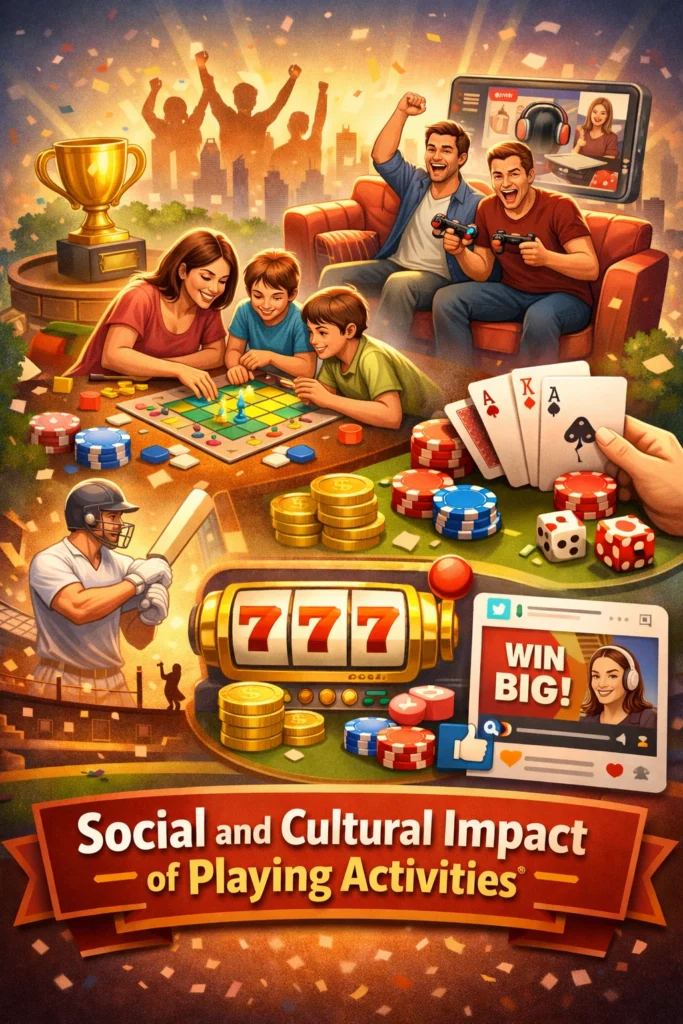
Across societies, recreational activities have always brought people together. Friendly competition builds relationships, encourages communication, and creates shared memories. Families gather around boards, friends connect through multiplayer matches, and communities celebrate tournaments. In these environments, participation matters more than the result. The experience itself becomes the reward.
However, when money enters the picture, the atmosphere changes. What once felt cooperative can become tense. Instead of laughter, there may be silence while outcomes are revealed. The emotional reactions grow stronger because the stakes feel personal. A win excites one person, but a loss may burden another. This contrast explains why some gatherings remain joyful while others become uncomfortable.
Media and popular culture also shape perception. Movies and advertisements often highlight dramatic victories and glamorous moments. Rare success stories travel far, while ordinary losses remain private. Over time, people may develop unrealistic expectations about how often success actually occurs. The activity starts to appear easier and more rewarding than it truly is.
Technology has expanded participation beyond physical locations. A person can now engage from home, alone, without social feedback. Without the presence of others, natural stopping points disappear. In traditional settings, conversation and environment helped people pause. In digital environments, continuous access makes self-control more important.
Communities that promote balance usually emphasize limits and awareness. They encourage enjoyment without dependency. When individuals treat participation as occasional entertainment rather than a solution to problems, the experience stays positive. The key factor is intention — whether the activity supports life or begins to replace parts of it.
Understanding the broader social influence helps people make healthier choices. Activities meant for relaxation should reduce stress, not create it. When approached with moderation and clarity, they remain a form of recreation rather than a source of pressure.
Managing Balance and Personal Control
Enjoyment stays healthy when boundaries exist. Any recreational activity, whether competitive or chance-based, should fit within daily life instead of dominating it. Balance begins with awareness — knowing why you are participating and how long you intend to continue. A clear purpose prevents impulsive decisions.
Setting limits before starting is one of the most effective habits. Decide a time frame and a comfortable spending amount in advance, then treat those limits as final. When the boundary is reached, the session ends regardless of outcome. This approach removes emotional decision-making and replaces it with planned behavior.
Breaks also play an important role. Stepping away resets attention and reduces the urge to continue automatically. Without pauses, the mind adapts to a continuous loop where each round feels like a natural extension of the previous one. Short interruptions help restore perspective and reduce over-engagement.
Another useful practice is separating recreation from mood management. Activities meant for fun should not become a response to stress, frustration, or financial pressure. When participation begins as an escape from problems, expectations rise and disappointment grows stronger. Keeping it occasional preserves enjoyment.
Tracking time and spending can improve self-control. Simple awareness often changes behavior because people act more carefully when they see clear numbers. Many individuals realize they have been engaged longer than expected only after checking a clock. Monitoring prevents that surprise.
Finally, maintaining other hobbies ensures variety. Reading, exercise, social interaction, and creative pursuits provide satisfaction without reliance on uncertain outcomes. A balanced routine distributes attention across multiple interests so no single activity becomes overly important.
Personal control is not about avoiding entertainment — it is about deciding when to start and when to stop. When choice remains intentional, recreation remains enjoyable.
Future Trends and Changing Behavior
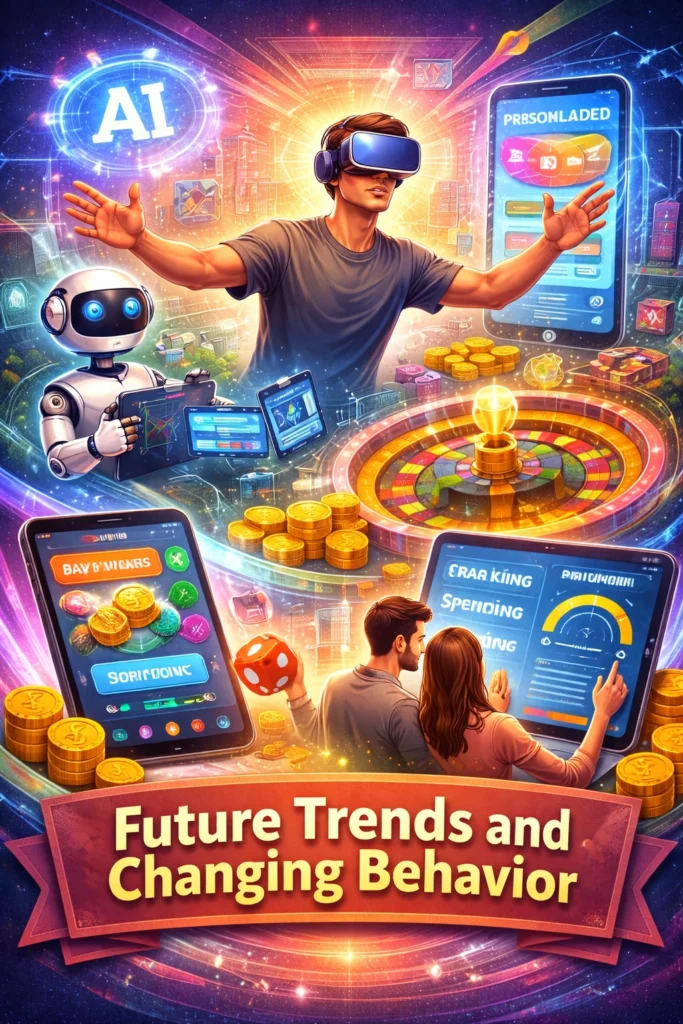
Entertainment is constantly evolving, and interactive experiences continue to merge technology with human psychology. Faster internet, immersive graphics, and mobile accessibility have transformed how people participate. Activities that once required specific places are now available anywhere, at any time. Convenience has become the biggest change.
Younger audiences are growing up in digital environments where rewards appear instantly. Progress bars, achievements, and surprise bonuses shape expectations. People increasingly prefer quick feedback instead of long waiting periods. As a result, modern platforms design shorter rounds and faster outcomes to match attention patterns.
Virtual environments are also expanding. Interactive worlds allow participants to socialize, compete, and collect digital items within shared spaces. The experience feels more like a living environment than a simple activity. This shift increases emotional attachment because users feel present rather than just observing.
Artificial intelligence is beginning to personalize experiences. Systems can adjust difficulty, recommend content, and predict engagement patterns. While personalization improves enjoyment, it also means experiences adapt to individual behavior, making them more appealing and harder to leave. Awareness becomes more important as environments grow smarter.
Another trend is transparency and education. Many communities now promote responsible participation and clearer understanding of probability. Discussions about habits, limits, and well-being are becoming more common. This reflects a broader cultural shift toward mindful entertainment rather than passive consumption.
In the coming years, the biggest change will likely be perception. People will not only ask whether something is fun, but also whether it fits their lifestyle and mental comfort. The focus is moving from pure excitement to sustainable enjoyment — experiences that entertain without overwhelming daily life.
Conclusion: Choosing Awareness Over Impulse
Recreation has always been part of human life. People naturally look for excitement, challenge, and moments that interrupt routine. Some activities depend on skill and practice, while others depend on unpredictability and chance, yet both attract attention because they create emotion. The difference is not in the activity itself but in the mindset of the participant. When a person approaches entertainment with clarity and limits, it stays enjoyable. When approached with urgency or expectation, it can slowly become pressure.
In the digital era, access is constant. A person can open a platform within seconds, whether exploring general gaming experiences through kheloyaar or visiting a betting-focused environment like betbhai9. The ease of switching between these spaces makes awareness more important than ever. Convenience removes natural stopping points, so the responsibility shifts to the individual. The decision to pause, continue, or exit is no longer controlled by location or time — it is controlled by self-discipline.
Healthy participation begins before starting. A clear intention protects enjoyment. If someone joins for relaxation, they should leave once relaxation ends. If they join for competition, they should accept results without trying to reverse them. Problems begin when the purpose changes mid-session. Many people continue not because they want to play, but because they want to recover, prove something, or chase a previous feeling. At that moment, the activity stops being entertainment and starts becoming emotional decision-making.
Awareness also means recognizing internal signals. Fatigue, irritation, and urgency are natural indicators to step away. Enjoyment feels light; pressure feels heavy. A person who listens to these signals maintains balance. A person who ignores them extends the experience beyond comfort. Over time, small extensions accumulate and transform habits.
Another important aspect is acceptance of outcomes. Every uncertain activity includes results outside personal control. Accepting this truth prevents frustration. Trying to force a different result often leads to repeating behavior without satisfaction. Walking away calmly — regardless of outcome — protects mental well-being and keeps recreation in its proper place within daily life.
Ultimately, control is not about avoiding entertainment. It is about deciding its role. When activities support relaxation, social connection, or brief excitement, they enrich life. When they begin to dictate mood, attention, or routine, they require distance. The healthiest participants are not those who never engage, but those who always remain aware of why they engage and when they should stop.
Winning or losing is temporary. Peace of mind lasts longer. When awareness leads and impulse follows, recreation remains a positive experience rather than a demanding one.
Frequently Asked Questions (FAQ)
1. What is the main difference between playing games and participating in gambling activities?
The primary difference lies in control over outcomes. In most traditional or digital games, a player can improve results through practice, strategy, timing, and learning. Progress depends on skill development. In gambling activities, outcomes rely largely on chance and probability, meaning experience does not significantly change long-term results. While both can feel similar because they involve excitement and competition, one rewards improvement and the other relies on unpredictability. Understanding this distinction helps people set realistic expectations before participating.
2. Why do people enjoy uncertain outcomes so much?
Humans are naturally curious and motivated by possibility. The mind reacts strongly to anticipation — the period before knowing a result. During this moment, the brain releases chemicals connected to motivation and excitement. Interestingly, the anticipation itself often feels more stimulating than the reward. This is why waiting for a result, spinning a wheel, opening a reward box, or watching a final score can feel thrilling even if the outcome is ordinary.
3. Can entertainment activities become stressful instead of relaxing?
Yes, they can. An activity meant for relaxation may become stressful if expectations change. When a person starts focusing on recovering losses, proving ability, or achieving a specific outcome rather than enjoying the experience, emotional pressure increases. Stress usually appears when the activity becomes tied to mood regulation instead of leisure. Taking breaks and maintaining clear limits helps prevent this shift.
4. Why do people continue even after repeated losses?
Several psychological factors influence this behavior. People often remember wins more vividly than losses, creating an impression that success is close. Near-wins — outcomes that almost succeed — also encourage continuation because the brain interprets them as progress. Additionally, many individuals feel a strong urge to return to their starting point, believing the next attempt may correct previous results. This combination of memory bias and expectation can lead to extended participation.
5. Is it possible to participate safely?
Yes, when approached responsibly. Safety comes from planning before starting rather than deciding during the activity. Setting a time limit, choosing a comfortable spending boundary, and accepting results as final are practical strategies. The key is treating the activity as scheduled entertainment, not as a solution to financial or emotional concerns.
6. Does technology make participation more frequent?
Modern technology increases accessibility. Mobile devices allow instant entry at any moment, which removes natural pauses that once existed when people had to travel or wait for specific times. Because of this, individuals need stronger personal boundaries. Notifications, quick loading times, and continuous availability encourage longer sessions unless the user consciously stops.
7. Are social influences important in shaping behavior?
Very much so. Friends, online communities, and media highlights often show successful moments more than ordinary outcomes. Seeing repeated success stories can create unrealistic expectations. People may assume results occur more often than they actually do. Awareness of this selective visibility helps maintain realistic perception.
8. How can someone tell when it is time to stop?
Common signs include fatigue, frustration, impatience, or playing without enjoyment. If the activity no longer feels entertaining and instead feels necessary, it is a signal to pause. Another indicator is losing track of time or trying to immediately reverse a result. Stopping at the first sign of discomfort prevents habits from forming.
9. Should recreational activities replace other hobbies?
They should not replace them entirely. A balanced routine includes multiple forms of leisure such as physical activity, social interaction, creative hobbies, and rest. Variety reduces dependency on a single source of excitement and keeps entertainment refreshing rather than repetitive.
10. What is the healthiest mindset to maintain?
The healthiest mindset is acceptance and intention. Enter with the goal of enjoyment, not expectation. Decide limits before beginning and respect them afterward. When people view outcomes as part of the experience rather than a target to control, they maintain emotional balance and keep recreation positive.