
Introduction to IPL Match ID
In the modern era of cricket, where technology drives fan engagement and data powers every insight, the concept of IPL Match ID has become increasingly important. While most fans focus on scores, players, and match results, there is a complex digital system working behind the scenes to organize and deliver all this information accurately. At the center of this system lies the IPL Match ID.
An IPL Match ID is a unique identifier assigned to every match in the Indian Premier League. It acts as a digital reference point that helps platforms track, store, and retrieve match-related data efficiently. From live score updates to detailed analytics and fantasy cricket calculations, everything is connected through this single identifier.
As the IPL continues to grow globally, handling massive volumes of real-time data has become a necessity. The IPL Match ID ensures that each match is clearly distinguished, making it easier for broadcasters, apps, analysts, and fans to access precise information without confusion. Understanding its role provides deeper insight into how modern cricket operates beyond the field.
What is an IPL match ID?
The IPL Match ID is a unique numerical code assigned to every match played in the Indian Premier League. It serves as a distinct identity for each game, ensuring that no two matches are ever confused within digital systems. This identifier is generated before the match and remains permanently associated with it, even after the tournament ends.
In simple terms, the IPL Match ID works like a tracking number. Just as a tracking ID helps you locate a parcel, the IPL Match ID helps systems locate and manage all information related to a specific cricket match. This includes match schedules, team details, player performances, live scores, and final results.
Every time a match takes place, massive amounts of data are produced—from ball-by-ball commentary to advanced performance metrics. The IPL Match ID ensures that all this data is grouped correctly under one reference. Without it, organizing and retrieving match information across platforms would become extremely difficult.
This system is especially useful when multiple matches are happening in a tournament. With several games played across different venues and dates, the IPL Match ID guarantees accuracy and prevents data overlap. It allows websites, apps, and broadcasters to instantly pull the correct match details and present them to users in real time.
Overall, the IPL Match ID is not just a number—it is a foundational element that supports the entire digital infrastructure of the IPL, making modern cricket consumption smooth, fast, and reliable.
Importance of IPL Match ID in Cricket Technology
The IPL Match ID plays a vital role in shaping how cricket is experienced in the digital age. While it may appear to be just a technical element, its impact is far-reaching across multiple platforms and systems that fans interact with every day.
One of the key reasons the IPL Match ID is important is its ability to maintain accuracy. In a tournament like the IPL, where matches are played frequently and sometimes even on the same day, distinguishing one game from another is crucial. The IPL Match ID ensures that every piece of data—whether it is a score update or a player statistic—is linked to the correct match.
Another major aspect is speed and efficiency. Modern cricket fans expect real-time updates without delays. The IPL Match ID allows servers and applications to quickly fetch and display the exact match data requested by users. This reduces loading time and ensures a seamless viewing experience.
The IPL Match ID also supports consistency across platforms. Whether you are watching a match on television, checking scores on a mobile app, or following commentary on a website, all platforms rely on the same match ID to deliver synchronized information. This ensures that fans receive uniform updates regardless of where they are accessing the match.
In addition, the IPL Match ID is essential for integrating advanced technologies. Features like predictive analytics, performance tracking, and AI-driven insights depend on well-structured data. By organizing information under a unique identifier, the IPL Match ID makes it easier for these technologies to function effectively.
Ultimately, the IPL Match ID is a cornerstone of cricket technology. It connects data, platforms, and users, enabling a smooth and accurate flow of information that enhances the overall cricket experience.
How IPL Match ID Works in Live Match Updates
The IPL Match ID becomes most powerful during live matches, where millions of fans are actively following every ball in real time. Behind every live score update, commentary line, and statistic you see on your screen, the IPL Match ID is constantly at work.
When a match begins, all incoming data—such as runs scored, wickets taken, overs completed, and player actions—is tagged with that specific IPL Match ID. This tagging ensures that every update is linked to the correct match without any confusion, even when multiple matches are happening in the tournament.
As the game progresses, data is collected and transmitted from the stadium to central servers. These servers process the information and distribute it across various platforms like mobile apps, websites, and broadcasting systems. The IPL Match ID acts as a reference point, allowing these platforms to pull the exact data they need instantly.
For example, when you open a live score app and select a match, the app uses the IPL Match ID to fetch all related information—current score, partnerships, run rate, and ball-by-ball commentary. This happens within seconds, giving users a seamless and real-time experience.
Additionally, live graphics shown on television—such as score overlays, player stats, and match summaries—are also powered by systems that rely on the IPL Match ID. This ensures that viewers receive accurate and synchronized updates throughout the match.
In essence, the IPL Match ID functions as the central link that connects real-time data with user interfaces. Without it, delivering fast, accurate, and organized live updates across millions of devices would be nearly impossible. Output in
Role of IPL Match ID in Fantasy Cricket Platforms
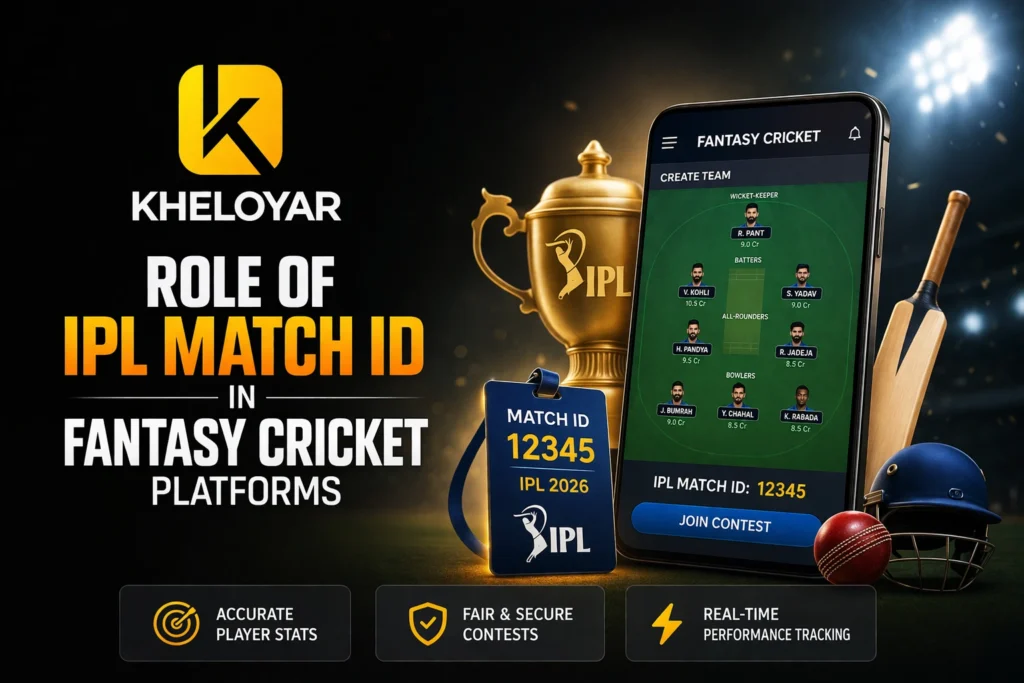
The IPL Match ID plays a crucial role in the smooth functioning of fantasy cricket platforms, which have become extremely popular among cricket fans. These platforms allow users to create virtual teams and earn points based on real-life player performances during IPL matches. Behind this engaging experience lies a highly structured data system powered by the IPL Match ID.
Every fantasy contest is directly linked to a specific IPL match ID. This ensures that all player actions—such as runs, wickets, catches, and strike rates—are accurately recorded for that particular match. The moment a player performs on the field, the data is instantly tagged with the corresponding IPL match ID and reflected in the fantasy platform.
Accuracy is especially important in fantasy cricket, as even the smallest mistake can affect user rankings and rewards. The IPL Match ID ensures that there is no mix-up between matches, players, or statistics. It keeps all data aligned with the correct game, maintaining fairness and transparency.
Additionally, the IPL Match ID allows fantasy platforms to update scores in real time. Users can track their team’s performance ball by ball, making the experience more interactive and exciting. This real-time synchronization is only possible because every data point is linked back to a unique match identifier.
Another important aspect is contest management. Fantasy platforms host multiple contests for different matches simultaneously. The IPL Match ID helps organize these contests efficiently, ensuring that each one is associated with the correct match and dataset.
In summary, the IPL Match ID is the backbone of fantasy cricket systems. It enables real-time scoring, ensures data accuracy, and supports a seamless gaming experience, making it an essential component of modern cricket engagement.
IPL Match ID in Data Analytics and Performance Insights
In modern cricket, data analytics has become a game-changer, and the IPL Match ID is at the center of this transformation. Teams, analysts, and broadcasters rely heavily on structured data to evaluate performance, plan strategies, and deliver deeper insights to fans. The IPL Match ID makes this entire process possible by organizing vast amounts of match data in a systematic way.
Every match generates detailed information, including batting patterns, bowling variations, partnerships, strike rates, and fielding efficiency. By assigning all this data to a specific IPL Match ID, analysts can easily isolate and study a single match or compare it with others. This structured approach allows for accurate and meaningful analysis.
For instance, analysts can use IPL Match IDs to track how a player performs against a particular team or under certain match conditions. They can identify trends such as scoring patterns in powerplays, effectiveness of bowlers in death overs, or team performance in different venues. These insights help teams make informed decisions and refine their strategies.
Broadcasters also benefit from this system. During live matches, commentators often share interesting statistics and comparisons. These insights are pulled from databases using IPL Match IDs, ensuring that the information presented is both relevant and accurate.
Moreover, advanced technologies like machine learning and predictive analytics depend on well-organized data. The IPL Match ID acts as a key reference point, allowing algorithms to process historical match data and generate predictions about future performances.
In essence, the IPL Match ID transforms raw match events into valuable insights. It enables deeper understanding, smarter strategies, and a richer viewing experience, making it an indispensable tool in the world of cricket analytics.
IPL Match ID and Historical Record Keeping
The IPL Match ID plays a significant role in preserving the history of the Indian Premier League. Over the years, the IPL has delivered countless unforgettable moments—thrilling finishes, record-breaking performances, and iconic player achievements. Storing and accessing these moments accurately would not be possible without a structured system like the IPL Match ID.
Each completed match is archived in databases along with its IPL Match ID, which acts as a permanent reference. This allows historians, analysts, and fans to revisit any match from any season with complete accuracy. Whether it’s checking a detailed scorecard, reviewing player statistics, or watching key highlights, everything is linked back to the specific IPL Match ID.
This system also helps in maintaining consistency across long periods of time. As the IPL continues to grow year after year, the volume of data increases significantly. The IPL Match ID ensures that even older matches remain organized and easily accessible, without getting lost in massive datasets.
Another important benefit is comparison. Fans and experts often compare matches across different seasons—such as highest scores, fastest centuries, or best bowling figures. By using IPL Match IDs, these comparisons become more precise, as each match can be individually analyzed and verified.
In addition, media outlets and content creators rely on IPL Match IDs to produce accurate reports and retrospectives. Whether it’s a “Top 10 Matches” list or a deep dive into a classic game, the IPL Match ID ensures that all referenced data is correct and traceable.
Overall, the IPL Match ID is essential for preserving the legacy of the tournament. It keeps the history of every match intact, organized, and accessible, allowing future generations to explore and enjoy the rich heritage of IPL cricket.Output in
Technical Structure Behind IPL Match ID
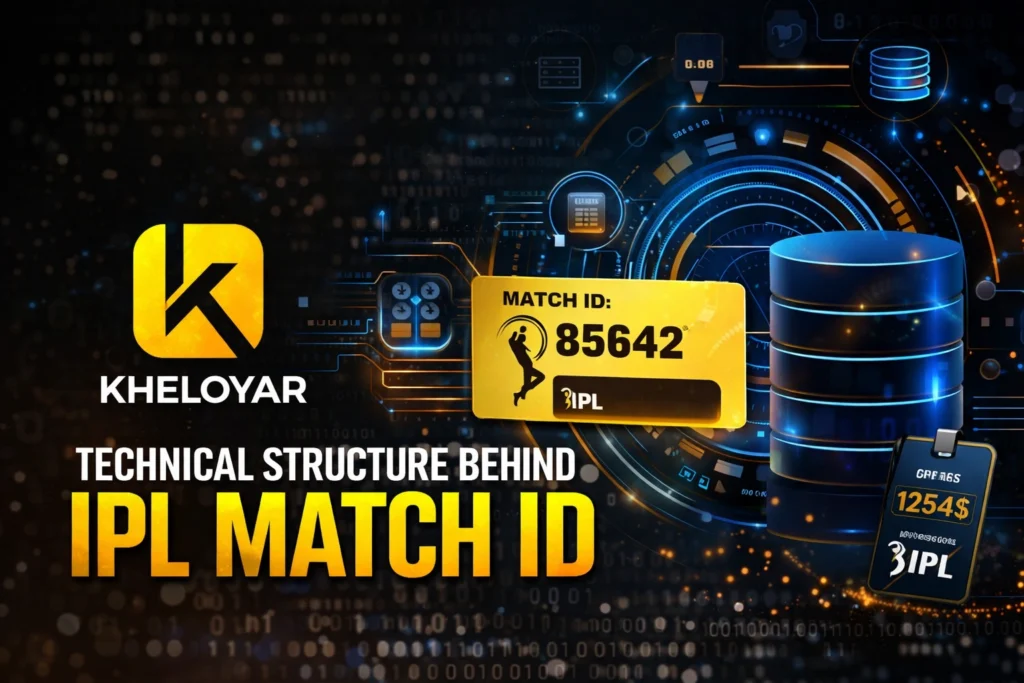
From a technical perspective, the IPL Match ID is a fundamental component of database management systems used in cricket technology. It is not just a random number but a carefully assigned unique key that helps organize and connect vast amounts of match-related data.
In database terms, the IPL Match ID acts as a primary key. This means it uniquely identifies each match record in a database table. Once a match is assigned an IPL Match ID, all related information—such as team details, player statistics, ball-by-ball events, and match results—is linked to this key.
The system works through relational databases, where multiple tables store different types of data. For example, one table may contain match summaries, another may store player performances, and a third may record ball-by-ball actions. The IPL Match ID is used across all these tables to connect the data seamlessly. This ensures that when a system retrieves information, it pulls the correct and complete dataset for that specific match.
Another important aspect is data integrity. Because the IPL Match ID is unique, it prevents duplication and confusion. Even if two matches have similar teams or identical scores, their IPL Match IDs will always be different, ensuring clear separation of records.
From a development standpoint, APIs (Application Programming Interfaces) also rely heavily on IPL Match IDs. When a mobile app or website requests match data, it sends a query with the IPL Match ID. The server then responds with all relevant information associated with that ID, enabling fast and accurate data delivery.
Scalability is another advantage. As the IPL continues to expand with more matches and seasons, the IPL Match ID system allows databases to handle increasing amounts of data without losing structure or efficiency.
In summary, the IPL Match ID is the backbone of the technical architecture that powers modern cricket platforms. It ensures accurate data linking, supports efficient retrieval, and maintains the overall reliability of digital cricket systems.
Future Scope and Conclusion
As cricket continues to evolve alongside technology, systems that organize and manage match data will become even more advanced. The foundation laid by unique match identification methods will support innovations like real-time predictive insights, personalized fan experiences, and deeper statistical breakdowns. With the integration of artificial intelligence and machine learning, data from past and ongoing matches can be used to forecast outcomes, analyze player behavior, and enhance decision-making for teams.
In the coming years, fans can expect more interactive features such as customized dashboards, immersive viewing experiences, and smarter fantasy platforms. All of these developments rely on structured and well-connected data systems that can handle massive volumes of information efficiently.
At its core, the idea behind using a unique identifier for every match ensures clarity, accuracy, and consistency across all platforms. It simplifies how data is stored, accessed, and shared, making the entire cricket ecosystem more reliable and user-friendly.
To conclude, while fans celebrate the action on the field, there is a sophisticated digital framework working quietly in the background. This system ensures that every run, wicket, and milestone is captured and delivered seamlessly. As technology continues to grow, this invisible structure will play an even bigger role in shaping how the game is experienced around the world.
Final Thoughts
Cricket today is not just about what happens on the pitch; it is also about how that action is recorded, processed, and delivered to millions of fans instantly. Systems that assign unique identifiers to matches have quietly become essential in making this possible. They ensure that every piece of information remains organized, accessible, and accurate across different platforms.
As digital consumption continues to rise, the need for clean and structured data will only grow stronger. From broadcasters to mobile apps and analytical tools, every part of the ecosystem depends on reliable data flow. This is where match identification systems prove their long-term value, supporting both current needs and future innovations.
For fans, the experience feels simple—just open an app and follow the match. But behind that simplicity lies a powerful structure that connects every detail seamlessly. Understanding this hidden layer adds a new appreciation for how modern cricket operates.
In the bigger picture, technology and sports will continue to merge, creating smarter and more engaging experiences. And while these systems may remain invisible to most users, their role will always be central in shaping the future of the game.
Summary
The concept of organizing cricket matches through unique identification has become an essential part of the modern digital ecosystem. It ensures that every match is recorded separately, making it easier to manage large volumes of data generated throughout a tournament. From live updates to post-match analysis, everything depends on accurate data structuring.
Throughout this discussion, we explored how such systems support real-time tracking, enable fantasy gaming platforms, and power advanced analytics. They also play a key role in preserving historical records, allowing fans and experts to revisit past matches with complete accuracy.
In addition, the technical framework behind these systems highlights how databases and applications work together to deliver seamless user experiences. By connecting different types of data under a single reference, platforms can provide fast, reliable, and synchronized information.
As cricket continues to grow globally, the importance of organized data will only increase. Efficient systems will remain crucial in handling expanding datasets and improving how fans interact with the game.
Overall, while these mechanisms operate in the background, they are fundamental to how cricket is consumed today. They ensure that every moment of the game is captured, stored, and shared in a structured and meaningful way.
Frequently Asked Questions (FAQs)
1. What does an IPL Match ID mean?
It is a unique number given to every IPL match so that all related details can be stored and accessed correctly.
2. Why is it important during live matches?
It helps systems show the right score and updates for the correct game, especially when multiple matches are happening.
3. How does it support fantasy cricket apps?
It connects player performance to a specific match, ensuring that points and rankings are calculated accurately.
4. Can it be used to check old matches?
Yes, it allows users to find past match details like scorecards, stats, and highlights easily.
5. How do apps use this system?
Apps use this unique number to quickly load match data such as scores, commentary, and player information.
6. Are there platforms where I can explore cricket-related features online?
Yes, platforms like kheloyaar provide interactive cricket experiences and related features for users.
7. Is this concept useful for beginners?
Yes, it helps in understanding how match data is managed and displayed across different platforms.
8. Does each match have a different number?
Yes, every match is assigned its own unique number to avoid any confusion.