

Introduction to Batting Play in Cricket
Batting play in cricket is more than just scoring runs—it is the art of controlling the game, building momentum, and applying pressure on the opposition. From classical Test match innings to explosive T20 performances in tournaments like the Indian Premier League and the global stage of the ICC Cricket World Cup, batting has always been the centerpiece of cricket’s excitement. A strong batting performance can shift the balance of a match within a few overs, making batting play one of the most important skills in the sport.
At its core, batting play is about technique, timing, temperament, and tactical awareness. A successful batsman understands that every ball tells a story. Some deliveries demand respect and defense, while others invite aggression. The ability to read the bowler’s intention, judge the line and length early, and respond with the correct shot separates average players from exceptional ones.
The Foundation of Strong Batting Play
Every great innings begins with a solid foundation. The basics of batting play—stance, grip, balance, and footwork—determine how confidently a batsman performs under pressure. A balanced stance ensures stability, allowing the batsman to move quickly either forward or backward. Proper grip gives control over the bat, helping execute both defensive strokes and attacking shots effectively.
Footwork is another key component of batting play. Quick and decisive foot movement allows the batsman to get into the right position, especially against fast bowlers and spinners. Against pace, moving back or forward quickly creates time to play the shot. Against spin, using the feet to reach the pitch of the ball reduces uncertainty and increases scoring opportunities.
Without mastering these fundamentals, even naturally talented players struggle to maintain consistency. That is why professional cricketers spend hours in the nets refining their basics before focusing on advanced techniques.
Batting Play Across Different Formats
Cricket has evolved into multiple formats—Test, One Day International (ODI), and T20—and batting play adapts accordingly. In Test cricket, patience and endurance define batting success. A batsman may need to spend hours at the crease, carefully building an innings and wearing down the bowling attack. Shot selection is cautious, and defense becomes as important as scoring.
In ODI cricket, batting play balances caution with controlled aggression. Rotating strike, building partnerships, and accelerating at the right moment are essential. Timing the innings—knowing when to consolidate and when to attack—makes a big difference.
T20 cricket, on the other hand, demands fearless and innovative batting play. Power hitting, quick singles, and creative strokes dominate this format. Batsmen often experiment with scoop shots, reverse sweeps, and switch hits to outsmart bowlers. However, even in T20, strong fundamentals remain crucial for consistency.
The Mental Side of Batting Play
Batting is not only a physical skill but also a mental battle. Confidence, focus, and resilience are critical elements of successful batting play. A batsman may face periods of low scoring or tough bowling spells. Staying calm under pressure and trusting one’s technique helps overcome these challenges.
Concentration is especially important. Losing focus for even a single delivery can result in dismissal. Professional batsmen develop routines between deliveries—adjusting gloves, tapping the pitch, or taking a deep breath—to maintain mental clarity.
Handling pressure situations also defines elite batting play. Whether chasing a target in the final overs or defending a modest total, composure can turn a difficult scenario into a memorable victory.
Timing and Shot Placement
One of the most beautiful aspects of batting play is timing. When the bat meets the ball perfectly, even a gentle stroke can race to the boundary. Timing depends on watching the ball closely and meeting it under the eyes. Proper balance enhances timing and allows controlled placement.
Placement is equally important. Smart batsmen focus on gaps in the field rather than just power. By rotating strike and finding boundaries through placement, they keep the scoreboard moving and frustrate bowlers.
Why Batting Play Defines Match Outcomes
In modern cricket, teams with strong batting lineups often dominate tournaments. A single outstanding innings can inspire the entire squad and energize fans. Batting partnerships build stability, while explosive finishes create unforgettable moments.
Ultimately, batting play is a blend of science and art. It combines technical precision with creative expression. Whether you are a beginner learning the basics or an experienced player refining your craft, understanding the principles of batting play is the first step toward cricketing success.
Advanced Batting Techniques & Match-Winning Strategies

Once a player masters the basics of batting play in cricket, the next step is developing advanced techniques and smart match strategies. Modern cricket is fast, competitive, and tactical. To succeed consistently, a batsman must go beyond simple defense and attacking shots. Advanced batting play is about adaptability, awareness, and controlled aggression.
1. Playing According to Match Situation
One of the most important aspects of advanced batting play is understanding the match situation. Cricket is not just about hitting boundaries—it’s about reading the game.
- If your team loses early wickets, your role is to stabilize the innings.
- If the required run rate is high, controlled aggression becomes necessary.
- During powerplay overs, finding gaps and clearing the infield is key.
- In death overs, innovative shots and power hitting are crucial.
Great players in tournaments like the Indian Premier League have shown how adjusting tempo according to match conditions leads to success. Smart batsmen know when to defend, when to rotate strike, and when to accelerate.
2. Mastering Power Hitting
Power hitting has become an essential part of modern batting play, especially in T20 cricket. However, power does not only come from strength—it comes from timing, balance, and bat speed.
To improve power hitting:
- Maintain a strong base with stable foot positioning.
- Use your core and shoulder rotation while playing lofted shots.
- Keep your head steady and eyes focused on the ball.
- Follow through completely after impact.
Shots like the pull, hook, and lofted drive are powerful scoring options. But they must be executed with correct technique to reduce risk. Blind aggression often leads to dismissal, while calculated power increases scoring efficiency.
3. Playing Spin with Confidence
Facing spin bowling requires sharp footwork and quick decision-making. Advanced batting play against spinners includes:
- Stepping out to convert length into full deliveries.
- Playing the sweep and reverse sweep effectively.
- Reading the bowler’s hand to judge turn early.
- Using soft hands to drop the ball into gaps.
In longer formats, patience against spin builds pressure on the bowler. In shorter formats, positive foot movement disrupts the spinner’s rhythm. The key is confidence and clarity in shot selection.
4. Rotating Strike Efficiently
Strike rotation is often underestimated, but it plays a huge role in maintaining momentum. Singles and doubles reduce pressure and keep the scoreboard moving. Advanced batsmen:
- Look for gaps instead of fielders.
- Tap the ball into open spaces.
- Communicate clearly with their batting partner.
- Turn quick singles into twos with fitness and awareness.
Even in major tournaments like the ICC Cricket World Cup, many successful innings are built on smart strike rotation rather than only boundaries.
5. Building Long Partnerships
Batting is a team effort. Partnerships stabilize innings and create scoring opportunities. Communication between partners, understanding each other’s strengths, and supporting one another during pressure situations define high-quality batting play.
A good partnership:
- Minimizes risky shots early.
- Rotates strike consistently.
- Targets weaker bowlers strategically.
- Accelerates after settling in.
6. Handling Pressure Situations
Advanced batting play shines during pressure moments—final overs, tricky pitches, or high-stakes matches. Mental strength becomes the biggest asset.
To handle pressure:
- Focus on one ball at a time.
- Avoid thinking too far ahead.
- Stick to your strengths.
- Maintain positive body language.
Elite batsmen stay calm even when required run rates climb or when bowlers attack aggressively. Composure under pressure separates good players from match-winners.
7. Continuous Improvement & Practice
Advanced batting play is built through consistent practice. Net sessions should include:
- Facing different types of bowlers.
- Practicing specific match scenarios.
- Improving fitness and reflexes.
- Reviewing performance through video analysis.
Modern cricket demands complete preparation. The more situations you practice, the more confident you become during real matches.
Common Batting Mistakes & How to Improve Performance
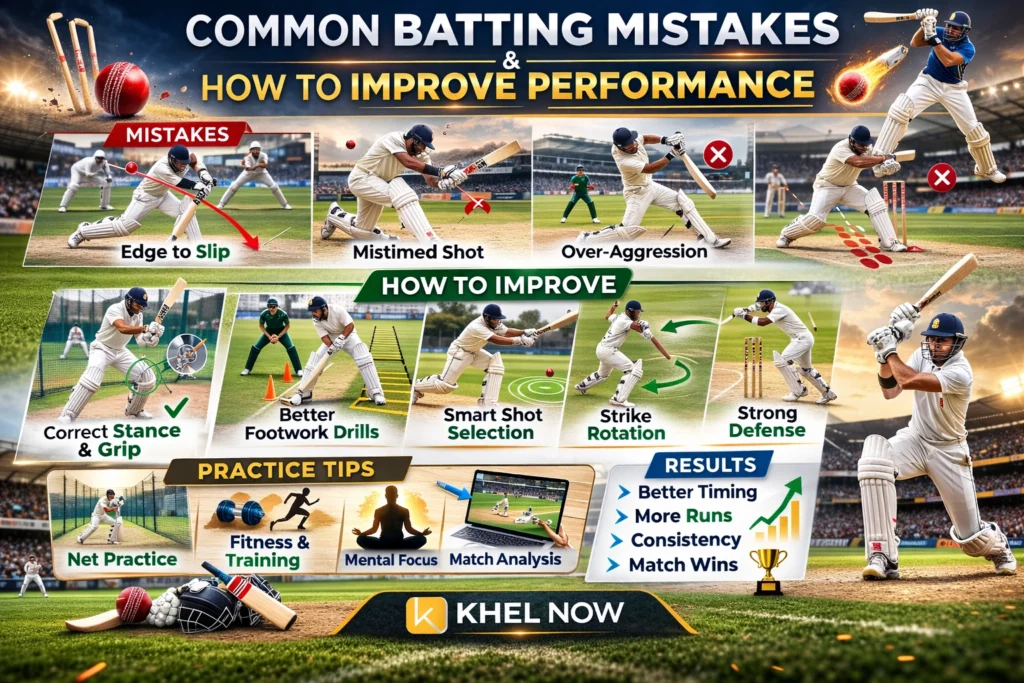
No matter how talented a player is, every batsman makes mistakes. Even world-class cricketers in tournaments like the ICC Cricket World Cup and the Indian Premier League have experienced poor form at some point in their careers. The difference between average and great players lies in how quickly they identify their weaknesses and work to improve them. Understanding common batting mistakes and learning how to correct them is essential for consistent performance.
1. Poor Shot Selection
One of the most common mistakes in batting play is poor shot selection. Many players attempt aggressive strokes without properly judging the line and length of the ball. Playing a drive to a delivery that is too short or attempting a pull shot to a full-length ball often results in easy catches.
How to Improve:
- Watch the ball closely from the bowler’s hand.
- Decide your shot only after judging length.
- Avoid risky shots early in your innings.
- Play according to the match situation.
Patience in the initial stages builds confidence and allows you to settle before expanding your stroke range.
2. Weak Footwork
Footwork is the backbone of effective batting play. Poor movement leads to imbalance and mistimed shots. When a batsman gets stuck on the crease, they become vulnerable to both fast bowling and spin.
How to Improve:
- Practice forward and backward movement drills.
- Stay light on your toes.
- Keep your weight balanced while playing strokes.
- Use net sessions to focus only on foot positioning.
Good footwork not only improves shot timing but also increases scoring options.
3. Losing Concentration
Cricket demands intense concentration. A batsman may play 30 perfect deliveries but lose focus on one ball and get dismissed. This lapse in concentration is common, especially in longer formats.
How to Improve:
- Develop a pre-delivery routine.
- Focus on one ball at a time.
- Avoid thinking about previous mistakes.
- Maintain positive body language.
Mental discipline is just as important as physical skill in batting play.
4. Over-Aggression
Modern cricket encourages attacking gameplay, but uncontrolled aggression often leads to failure. Many batsmen try to hit boundaries on every ball, increasing the risk of dismissal.
How to Improve:
- Balance aggression with smart strike rotation.
- Identify weaker bowlers before attacking.
- Target specific overs for acceleration.
- Understand field placements before playing big shots.
Controlled aggression helps maintain pressure without losing wickets.
5. Poor Defense Technique
Strong defensive skills form the foundation of great batting play. Without a solid defense, batsmen struggle against quality bowling attacks. Playing away from the body or with hard hands increases the chances of edges.
How to Improve:
- Keep the bat close to the body while defending.
- Play with soft hands to reduce edge carry.
- Leave deliveries outside off stump when possible.
- Practice defensive drills in net sessions.
A good defense builds confidence and allows you to survive tough spells.
6. Not Rotating Strike
Some batsmen rely too heavily on boundaries and forget the importance of singles and doubles. Failing to rotate strike builds pressure and gives bowlers control.
How to Improve:
- Look for gaps instead of only boundaries.
- Use soft hands to guide the ball into spaces.
- Improve running between the wickets.
- Communicate clearly with your partner.
Strike rotation keeps the scoreboard moving and disrupts the bowler’s rhythm.
7. Ignoring Fitness and Conditioning
Batting performance is closely linked to physical fitness. Poor stamina affects running between wickets and concentration levels during long innings.
How to Improve:
- Maintain a regular fitness routine.
- Include strength training for power hitting.
- Work on agility and reflex drills.
- Follow a balanced diet for sustained energy.
Fit players perform better under pressure and maintain intensity throughout the match.
8. Fear of Failure
Confidence plays a huge role in batting play. Fear of getting out can limit stroke execution and reduce scoring opportunities. Hesitation often leads to mistakes.
How to Improve:
- Trust your training and preparation.
- Learn from dismissals instead of fearing them.
- Maintain a positive mindset.
- Focus on execution rather than outcome.
Confidence grows with experience and preparation.
Batting Practice Drills & Training Routine for Consistent Performance
Improving batting play in cricket is not just about playing matches — it’s about structured practice, focused drills, and a disciplined training routine. Every successful batsman, whether playing domestic cricket or global tournaments like the Indian Premier League or the ICC Cricket World Cup, spends hours refining their technique behind the scenes.
If you want consistent performance, you must train with purpose. Random hitting in the nets will not build long-term improvement. Instead, a structured batting practice routine ensures growth in technique, timing, shot selection, and mental strength.
1. Warm-Up & Reaction Drills
Before picking up the bat, proper warm-up is essential. Batting requires flexibility, quick reflexes, and coordination. Start with:
- Light jogging (5–10 minutes)
- Dynamic stretches (shoulders, wrists, hamstrings)
- Reaction ball drills
- Hand-eye coordination exercises
Reaction drills improve your ability to judge pace and movement early. Quick reflexes are especially important when facing fast bowlers.
2. Shadow Batting for Technique Perfection
Shadow practice is one of the most underrated training methods in cricket. Stand in front of a mirror and practice:
- Correct stance
- Backlift position
- Forward defense
- Cover drive movement
- Pull and cut shot mechanics
Shadow batting helps develop muscle memory. When repeated regularly, your body naturally performs correct movements during real matches.
3. Net Practice with Specific Goals
Net sessions should always have a purpose. Instead of just hitting the ball, divide your practice into segments:
First 15 Minutes – Defense Focus
Play only defensive shots. Concentrate on balance and soft hands.
Next 20 Minutes – Shot Selection
Practice drives, cuts, and flicks based on ball length.
Final 15 Minutes – Match Simulation
Imagine a match scenario. For example:
- 30 runs needed in 4 overs
- Surviving a fast bowling spell
- Rotating strike in middle overs
Goal-oriented practice builds confidence and match awareness.
4. Footwork Improvement Drills
Strong footwork is critical for advanced batting play. To improve movement:
- Use agility ladders
- Cone drills for forward/backward movement
- Practice stepping out against spin
- Train quick back-foot adjustments
Better footwork increases control and reduces mistimed shots. It also allows you to attack spin confidently.
5. Throwdowns & Power Hitting Practice
Throwdown sessions allow you to focus purely on timing and power. A coach or teammate can deliver underarm or sidearm throws at different speeds.
During power hitting practice:
- Focus on balance first
- Keep your head steady
- Use full follow-through
- Aim for clean timing, not just strength
Controlled power makes you more effective in limited-overs cricket.
6. Strike Rotation & Running Between Wickets
Many batsmen ignore running drills, but quick singles and sharp doubles can change matches.
Practice:
- Quick start sprints
- Turning techniques
- Calling loudly and clearly
- Sliding the bat correctly
Good communication with your batting partner reduces run-out risks and builds partnerships.
7. Fitness & Strength Training
Modern batting demands strong physical conditioning. A good training routine includes:
- Core strengthening exercises
- Shoulder and forearm workouts
- Leg strength training
- Cardio endurance sessions
Strong legs help maintain balance during long innings. Core strength improves power generation.
8. Mental Conditioning & Visualization
Batting is 50% mental. Visualization is a powerful technique used by professional players. Before matches:
- Visualize scoring shots
- Imagine handling tough bowlers
- Practice staying calm under pressure
- Build positive self-talk habits
Mental preparation increases confidence and reduces fear of failure.
9. Performance Analysis & Improvement
After matches or practice sessions, analyze your performance:
- What type of ball dismissed you?
- Were you balanced while playing shots?
- Did you rotate strike effectively?
- Did you panic under pressure?
Self-analysis helps correct mistakes faster and accelerates improvement.
Final Thoughts on Batting Training
Consistent batting performance comes from disciplined training, focused drills, and mental preparation. Talent may give you an advantage, but structured practice builds long-term success.
By combining technique refinement, fitness training, match simulation, and mental conditioning, you can significantly improve your batting play. Whether you’re a beginner or an advanced cricketer, a smart training routine is the key to becoming a dependable, match-winning batsman.
❓ Frequently Asked Questions (FAQ) – Batting Play in Cricket
1. What is batting play in cricket?
Batting play in cricket refers to the techniques, skills, strategies, and mental approach used by a batsman to score runs effectively. It includes stance, grip, footwork, shot selection, timing, strike rotation, and match awareness.
2. How can I improve my batting play in cricket?
You can improve batting play by:
- Practicing proper stance and grip
- Improving footwork drills
- Working on shot selection
- Practicing net sessions with match scenarios
- Strengthening fitness and mental focus
Consistent practice and performance analysis are key to long-term improvement.
3. What are the most common batting mistakes?
The most common batting mistakes include:
- Poor shot selection
- Weak footwork
- Over-aggression
- Losing concentration
- Poor defensive technique
- Not rotating strike
Correcting these mistakes significantly improves batting performance.
4. How important is footwork in batting?
Footwork is extremely important in batting play. Good footwork helps you:
- Adjust to fast bowling
- Play spin confidently
- Maintain balance
- Improve timing
- Reduce the risk of getting out
Strong foot movement allows better shot execution.
5. How can I handle pressure while batting?
To handle pressure:
- Focus on one ball at a time
- Maintain positive body language
- Stick to your strengths
- Avoid thinking about results
- Practice visualization techniques
Mental strength is just as important as technical skill in cricket.
6. What is the best batting strategy for T20 cricket?
The best T20 batting strategy includes:
- Smart power hitting
- Quick strike rotation
- Targeting weaker bowlers
- Playing according to field placements
- Controlled aggression
Balance between risk and reward is crucial in T20 matches.
7. How do professional players train for better batting performance?
Professional cricketers train with:
- Structured net sessions
- Match simulation practice
- Fitness and strength training
- Video performance analysis
- Mental conditioning drills
Regular discipline and focused training routines lead to consistent performance.
Our Partner Websites & Trusted Betting Network
Success in the modern cricket ecosystem is not built alone. Just like strong batting partnerships create match-winning innings, powerful collaborations build trust, credibility, and long-term growth. Our platform proudly connects with a network of reliable partner websites that contribute to a broader, well-informed, and dynamic cricket community.
We believe that transparency, reliability, and user-focused experience are the pillars of any trusted betting and cricket information network. That’s why we naturally collaborate with platforms that share similar values of security, performance, and user engagement.
🌐 Our Trusted Partner Websites
Here are some of the trusted platforms within our extended network:
Each of these websites contributes to strengthening the overall digital cricket and betting ecosystem. Whether it’s match insights, platform access, gaming updates, or user engagement services, these partners help create a connected and efficient online environment.
🤝 Why Our Trusted Network Matters
In today’s competitive digital landscape, users look for:
- Secure platform access
- Fast and reliable performance
- Verified information sources
- Transparent services
- Community-driven engagement
By being associated with trusted websites, we ensure that our audience benefits from a broader and more reliable cricket and betting network. Just like building a strong batting lineup requires dependable teammates, creating a strong online ecosystem requires trustworthy partners.
🔐 Commitment to Reliability & Transparency
Our trusted betting network focuses on:
- Smooth user experience
- Secure digital infrastructure
- Regular platform updates
- Responsible engagement practices
- Community support
We emphasize maintaining a professional and transparent relationship with our partners. The goal is to create an environment where users feel confident while accessing cricket-related services and information.
📈 Strengthening the Cricket Community
Cricket is more than a sport—it is a global passion. By collaborating with reliable platforms, we aim to:
- Expand cricket knowledge
- Enhance user accessibility
- Improve digital engagement
- Support responsible participation
- Build long-term credibility
Strong networks build stronger communities. Just like partnerships at the crease build innings, partnerships in the digital space build sustainable growth.
🚀 Growing Together
Our association with these partner websites reflects our vision of growth through collaboration. Together, we aim to provide value, performance, and trust within the cricket and digital betting landscape.
As we continue expanding, our focus remains on quality, transparency, and user satisfaction—because long-term success comes from trusted relationships.